
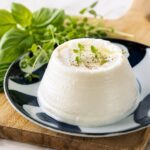
Easy Homemade Ricotta Cheese (30 Minutes, 3 Ingredients)
Make fresh, creamy Italian ricotta at home in 30 minutes with just 3 ingredients. A traditional Sicilian recipe that beats any store-bought.
Serving: 8
Calories: 155kcal
Ingredients
- 2 liters whole fresh milk
- 80 ml fresh lemon juice
- ⅔ teaspoon fine sea salt
Instructions
- Place the milk in a large pot over medium-low heat.
- Let the milk warm gradually to 194°F or 90°C, monitoring the temperature with an instant-read thermometer. The milk should get lightly foamy, if it starts to boil, remove it immediately from the heat.
- Once the milk temperature reaches the 90°C, remove the pot from the heat and pour in the lemon juice and season with sea salt.
- Place a lid over the pot, and allow the milk mixture to sit for 10 minutes undisturbed. After this time the milk should start separating in clumps.
- Set a strainer over a bowl and line the strainer with a cheesecloth. Scoop in the big curds out of the pot with a slotted spoon and transfer them to the strainer, then pour in the remaining curds.
- Let the ricotta sit for 15 minutes up to 1 hour, depending on how creamy you want it to be.
- You can eat the ricotta straight away or store it in an airtight container in the fridge for up to 2 days.
Notes
You can store fresh ricotta cheese in an airtight container in the fridge for up to 2 days.
Troubleshooting
If a batch goes wrong, it's almost always one of these: Nothing separated. Either the milk wasn't hot enough, or it was UHT. If the milk is fine, put it back on low heat, bring it up to temperature properly, and add another squeeze of lemon. The curds are tiny and grainy. Usually too much stirring, or milk that got too hot and started to boil. Next time, take it off the heat the moment it foams, and stir once, gently. Barely any curds formed. Not enough acid, or low-fat milk. Add another tablespoon of lemon juice, wait five more minutes, and see if it comes together. It's dry and crumbly. You drained it too long. Stir a splash of milk or cream back in and it will loosen up. It tastes sour, or too strongly of lemon. Too much acid went in. Use less next time, or switch to vinegar, which tastes more neutral. Did you try this recipe? Tag @thepetitecook or use the hashtag #thepetitecook - Looking at your pictures makes my day!
Nutrition
Calories: 155kcal | Carbohydrates: 13g | Protein: 8g | Fat: 8g | Saturated Fat: 5g | Polyunsaturated Fat: 1g | Monounsaturated Fat: 2g | Cholesterol: 25mg | Sodium: 301mg | Potassium: 340mg | Fiber: 1g | Sugar: 13g | Vitamin A: 406IU | Vitamin C: 4mg | Calcium: 283mg | Iron: 1mg
The information shown is an estimate provided by an online nutrition calculator. It should not be considered a substitute for a professional nutritionist’s advice.