
Easy Homemade Ricotta Cheese (30 Minutes, 3 Ingredients)
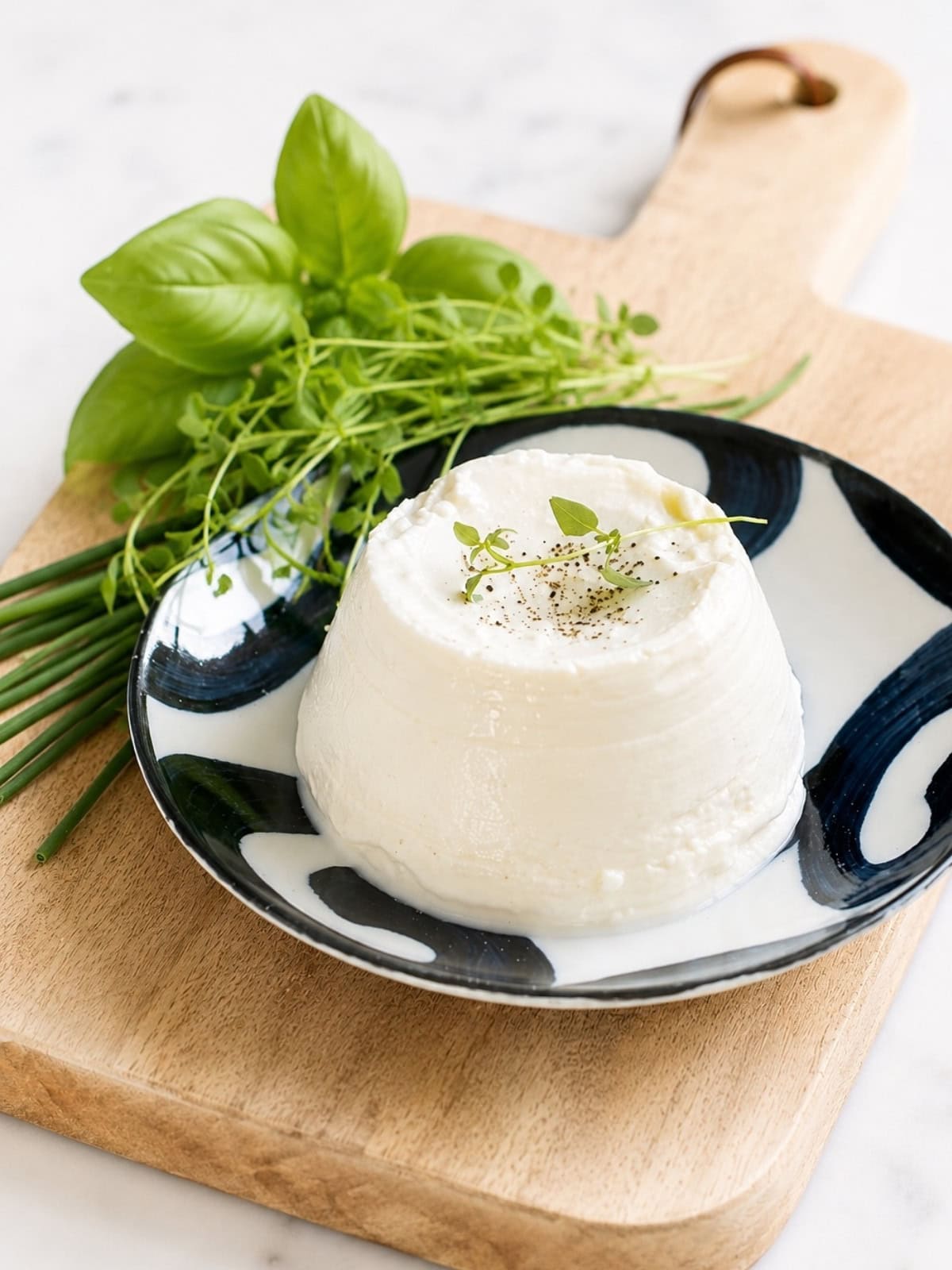
Ready in just 30 minutes with 3 simple ingredients. This is fresh, creamy Italian homemade ricotta, made exactly the way we make it at home.
I can't begin to tell you how much I love Italian homemade ricotta cheese.
It's soft, milky and just a little sweet, and it works in savoury and sweet recipes alike.
It's also naturally gluten-free and vegetarian-friendly, unlike Parmesan cheese.
Growing up in Sicily, ricotta was a huge part of our weekly menu. Since moving in another country, so I make my own as often as I can instead of buying it.
Once you taste the difference, you'll understand why!
What you'll learn in this post
- What ricotta cheese actually is, and why it isn't technically a cheese.
- How to make fresh ricotta in 30 minutes with milk, lemon juice and salt.
- Which milk to use between cow, sheep, goat or buffalo milk.
- How to fix the two things that go wrong most often.
- What to do with all that leftover whey.
Jump to:
- What you'll learn in this post
- What Is ricotta cheese?
- Homemade vs store-bought ricotta
- Ingredients
- Equipment you'll need
- How to make ricotta cheese at home
- Troubleshooting: why your ricotta didn't Work
- What to do with leftover whey
- Storing and freezing ricotta cheese
- Customise your ricotta
- Ricotta Substitutes
- Recipe FAQs
- Ricotta in savoury and sweet recipes
- Recipe
What Is ricotta cheese?
Ricotta is a fresh Italian dairy product. It's soft, white, slightly grainy and just a little sweet.
The name tells you how it's made. Ricotta means "re-cooked" in Italian, because the traditional version is made by cooking the whey left over from making another cheese, like pecorino or mozzarella.
Here's the fun part: because it's made from whey and not from milk curds, ricotta isn't technically a cheese at all. It's a dairy product, the same way as mozzarella and burrata.
The version in this post is the home cook's version. Instead of whey, we start with whole milk and add lemon juice to separate it.
Strictly speaking that makes it a fresh curd, not true ricotta. But the taste, the texture and everything you'd do with it are the same.
It takes 30 minutes instead of a whole cheesemaking day, and you can make it tonight.
Homemade vs store-bought ricotta
Shop-bought ricotta is fine. Really. But once you've made your own, it's hard to go back. Here's what actually changes.
- Taste. Fresh ricotta is sweeter and milkier. Tubs from the shop often taste flat or slightly sour, because they're days or weeks old by the time you buy them.
- Texture. Homemade is loose, fluffy and creamy. Many shop versions are firmer, because they're made for a longer a long shelf life.
- Ingredients. Yours has three things in it. Shop ricotta often has gums or stabilisers added in.
- Cost. A litre of milk usually costs less than a tub of good ricotta, and you get a decent amount of ricotta from it plus a jar of whey to cook with.
- Control. You decide how creamy or how firm it ends up, just by changing how long you drain it.
Ingredients
All you need to make Italian ricotta cheese at home is just 3 ingredients.
Here are my recommendations:
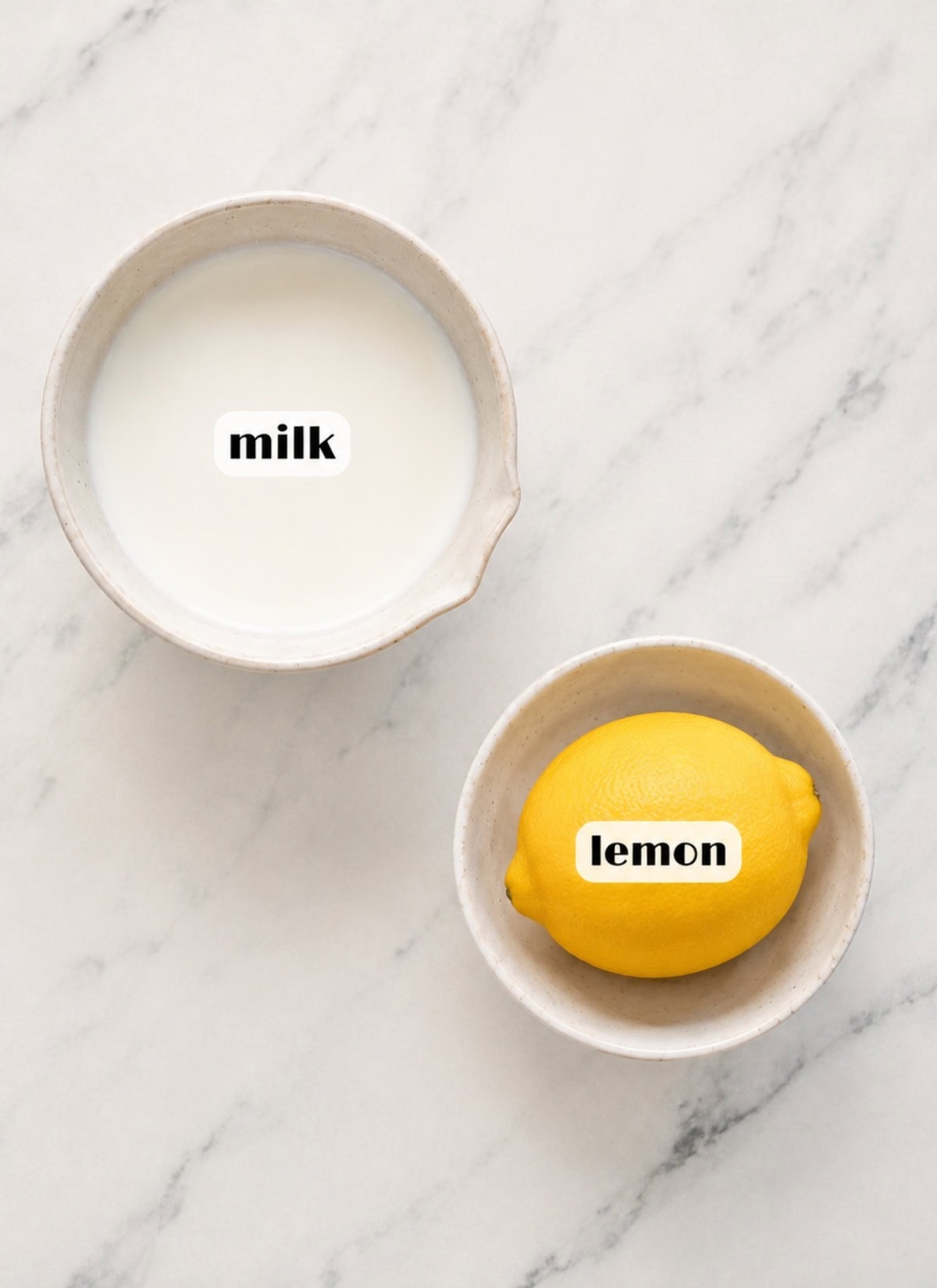
- Fresh whole milk (organic if you can)
- Juice of a lemon
- Sea salt
The milk does almost all the work here, so it's worth choosing well. Go for fresh whole milk. Low-fat milk gives you a drier, meaner curd, and skimmed milk barely works at all. The fat is what makes ricotta creamy.
One important rule: pasteurised milk is fine, but avoid UHT (ultra-high temperature) milk.
Which milk should you use?
You can make ricotta from any of these, and each one tastes different:
- Cow's milk: mild, milky and sweet. The easiest to find and the best place to start.
- Sheep's milk: richer and a little nutty. This is the classic Sicilian ricotta, and it's what goes inside the traditional cannoli. If you can find sheep's milk, try it at least once.
- Goat's milk: slightly tart, with that unmistakable goat's milk flavour. Lovely with honey.
- Buffalo milk: very high in fat, and super creamy. Hard to find outside Italy, but worth giving it a try if you find it.
You can also swap the lemon juice for white vinegar. Vinegar is more reliable and gives a slightly firmer curd; lemon gives a fresher, brighter taste.
Equipment you'll need
Nothing fancy. You almost certainly have most of this already.
- A large heavy pot. Heavy-bottomed is better, since it heats the milk evenly.
- An instant-read thermometer. Any cheap digital one will do.
- A strainer and something to line it with. Cheesecloth is traditional, but you've got options. See below.
- A slotted spoon for lifting the curds out gently.
No Cheesecloth? use one of these
- Butter muslin: finer than standard cheesecloth and catches more of the small curds. My favourite.
- A clean, thin cotton tea towel: works well. Skip anything fluffy or terry, and make sure it's been washed without fabric softener.
- A very fine mesh sieve on its own: fine if you don't mind losing some of the smallest curds.
If you want the classic basket shape with the ridged pattern on top, scoop the curds into a traditional ricotta basket instead of a lined strainer.
How to make ricotta cheese at home
The best part of this homemade ricotta recipe is that it takes about 30 minutes of hands-on work.
After that you just wait for the cheese to set.
Here's a quick overview of the process. Scroll to the end of the post for the full printable recipe.
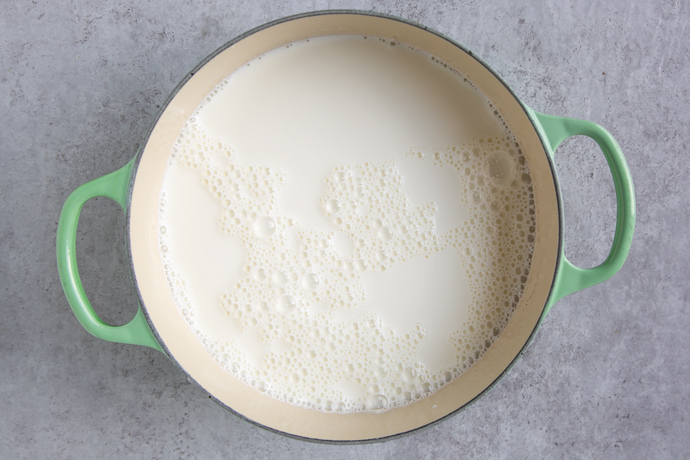
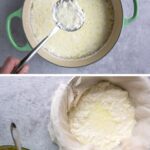
- Heat the milk. Pour it into a large pot and set it over medium-low heat.
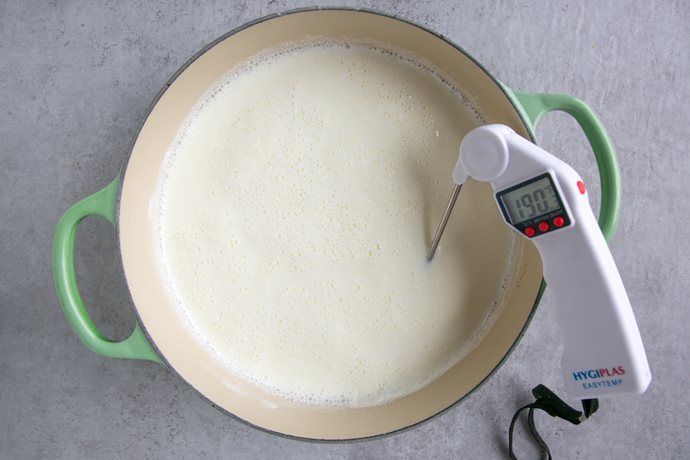
- Bring it to 194°F (90°C), watching with your thermometer. Go slowly. The milk should look lightly foamy on top. If it starts to boil, take it off the heat straight away.
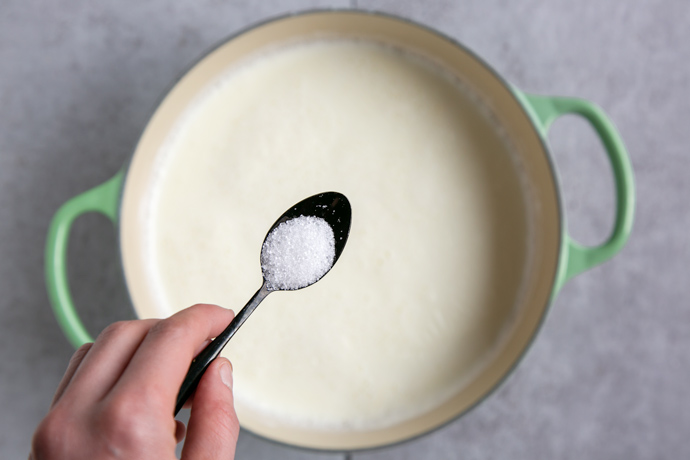
- Add the lemon juice and salt. Take the pot off the heat first, then pour them in and give it one gentle stir.
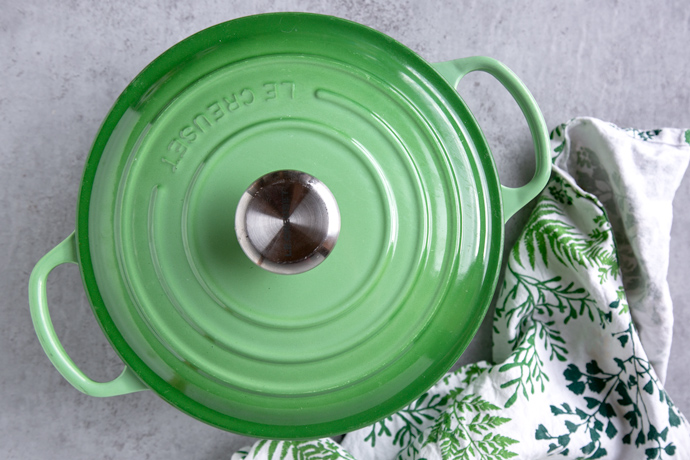
- Cover and wait 10 minutes. Don't stir, don't peek, don't poke it.
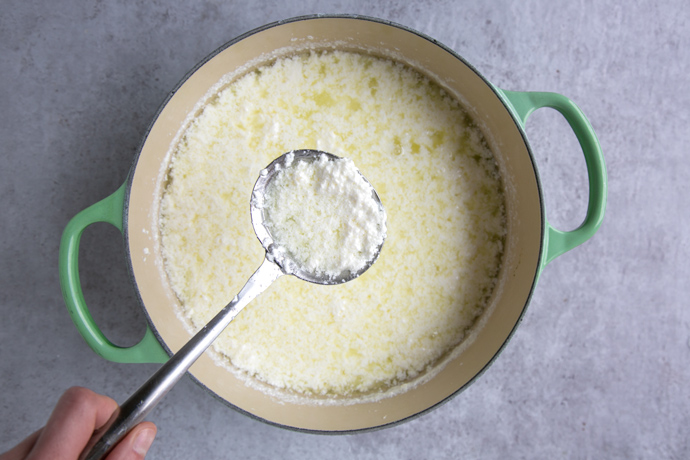
- Strain. Set a strainer over a bowl and line it with cheesecloth. Lift the big curds across with a slotted spoon first, then pour in the rest.
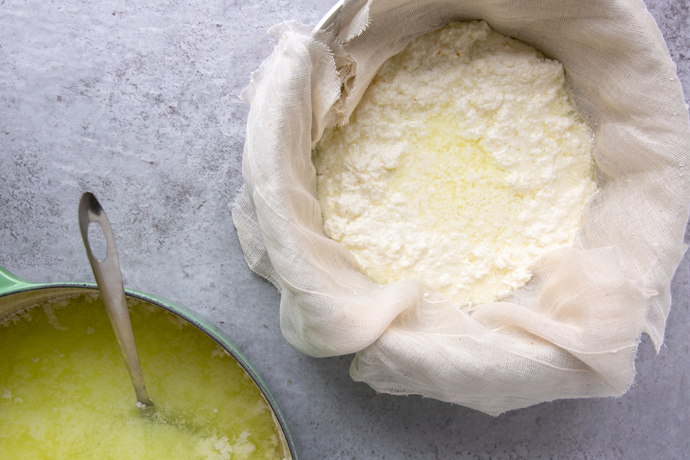
- Drain to taste. Fifteen minutes gives you soft, creamy ricotta. An hour gives you a firmer one you can slice. Anywhere in between is fair game.
COOKING TIP: Two things really matter here. Heat the milk slowly, and don't stir after the lemon juice goes in. Stirring breaks the curds while they're still forming, and grainy ricotta is what you get.
Troubleshooting: why your ricotta didn't Work
If a batch goes wrong, it's almost always one of these.
Nothing separated. Either the milk wasn't hot enough, or it was UHT. If the milk is fine, put it back on low heat, bring it up to temperature properly, and add another squeeze of lemon.
The curds are tiny and grainy. Usually too much stirring, or milk that got too hot and started to boil. Next time, take it off the heat the moment it foams, and stir once, gently.
Barely any curds formed. Not enough acid, or low-fat milk. Add another tablespoon of lemon juice, wait five more minutes, and see if it comes together.
It's dry and crumbly. You drained it too long. Stir a splash of milk or cream back in and it will loosen up.
It tastes sour, or too strongly of lemon. Too much acid went in. Use less next time, or switch to vinegar, which tastes more neutral.
It's too wet. Keep draining. Another 20 minutes usually does it.
What to do with leftover whey
That pale yellow liquid in the bowl is whey, and please don't pour it down the sink.
It's full of flavour and protein, and in Italy it's the starting point for real ricotta rather than a by-product.
- Bake with it. Swap it in for the water in bread or pizza dough. It gives a softer crumb and a lovely golden crust.
- Cook pasta, rice or potatoes in it instead of plain water.
- Add it to soups and stews in place of some of the stock.
- Blend it into smoothies for a mild protein boost.
- Use it in pancakes or ricotta-based batters in place of milk or buttermilk.
- Water your plants with it, diluted. My grandmother swore by this.
Whey keeps in the fridge for about 5 days, or freeze it in portions.
Storing and freezing ricotta cheese
In the fridge: keep fresh homemade ricotta in an airtight container and eat it within 2 to 3 days. It has no preservatives, so it won't last like a shop tub. Some liquid may separate out. Just drain it off.
In the freezer: yes, you can freeze it. Freeze it in an airtight container for up to 3 months, thaw overnight in the fridge, drain the extra liquid, and give it a good stir before using.
Freezing changes the texture. It comes out grainier and more watery once thawed.
Use it in lasagna, cannelloni, baked pasta, ricotta cake or pancakes, where the texture won't show.
Customise your ricotta
I can't stress enough how versatile ricotta is. Once it's drained, fold in whatever you fancy:
- Chopped herbs: fresh basil, thyme, parsley and sage all work
- Chopped rocket leaves
- Paprika or red chilli flakes
- Lemon or orange zest
- A drizzle of good honey
- Cracked black pepper and a little olive oil
Serve it with fresh salads, toasted bread, crumbled cookies or chopped fruit.
Ricotta Substitutes
Can't get fresh milk, or need a swap for a recipe? These come closest.
- Cottage cheese. The closest match by far. Give it a quick blend to smooth out the lumps, and use it in baked dishes.
- Full-fat Greek yogurt, strained overnight. Tangier than ricotta, but lovely in fillings and dips.
- Mascarpone. Much richer, much sweeter. Beautiful in desserts, far too heavy for savoury fillings.
- Cream cheese. Firmer and tangier, so thin it with a splash of milk first.
- Quark. Light, mild, high in protein. A very good swap in sweet recipes.
- Silken tofu, blended smooth. This is the dairy-free one that actually works, especially in lasagna and cannelloni.
Recipe FAQs
Yes, as long as it's made with pasteurised milk, which this recipe is. Eating it fresh and uncooked is honestly the best way to taste what you've made.
No, though they look alike. Cottage cheese is made from milk curds. Ricotta is made from the fine proteins left in whey, so it's softer, smoother and sweeter.
Yes, soy milk has enough protein to curdle when you add acid. Use unsweetened soy milk with no added gums and follow the recipe as written. The curds will be softer and you'll get less of it. Almond, oat and rice milk won't work. For a dairy-free swap in cooked dishes, blended silken tofu is the more reliable route.
Two to three days in an airtight container in the fridge. It has nothing added to preserve it, so eat it while it's at its best.
Yes. White vinegar works well and gives a slightly firmer, more neutral-tasting curd. Lemon gives a fresher flavour, which is why I prefer it.
Ricotta in savoury and sweet recipes
Ricotta is super versatile and belongs in both savoury and sweet dishes, just like mascarpone cheese.
You can also use it in place of cream cheese, yogurt or bechamel in plenty of recipes.
Here are my favourite ways to use it:
Savoury recipes with ricotta
- Ricotta Gnocchi — Ready in 20 Minutes
- Spinach & Ricotta Pasta Shells
- Bruschetta With Ricotta & Tomato Confit
- Ricotta, Spinach & Pumpkin Cannelloni
- Vegetarian Lasagna With No-Cook Ricotta Sauce
Sweet recipes with ricotta
- Lemon Ricotta Cake
- Bake ricotta Cheesecake
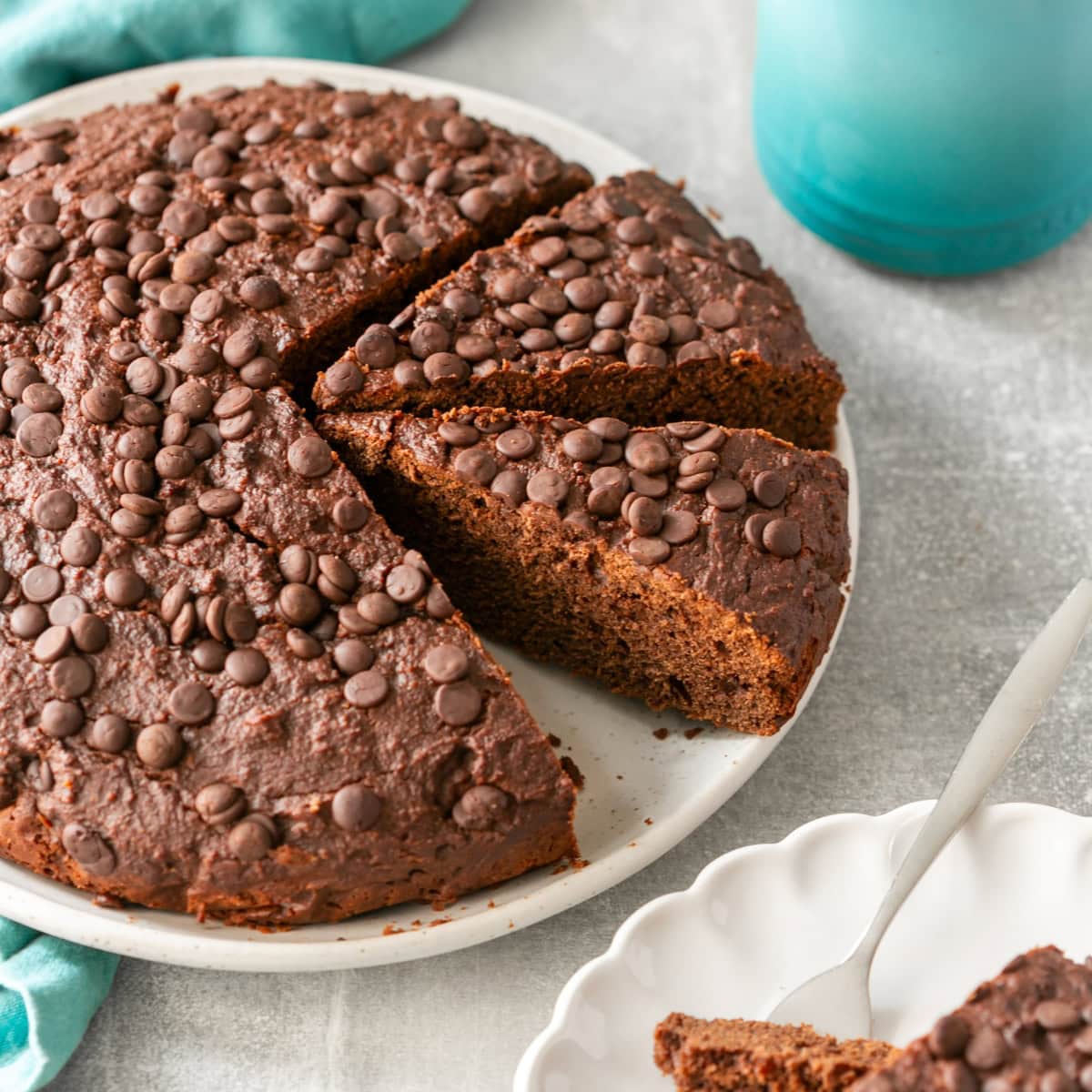
- Ricotta Chocolate Cake
- Chocolate Cannoli With Ricotta & Pistachios
Simple Ways to eat it right away
- Spread on warm toast with honey and cracked black pepper
- Spooned over roasted vegetables or a tomato salad
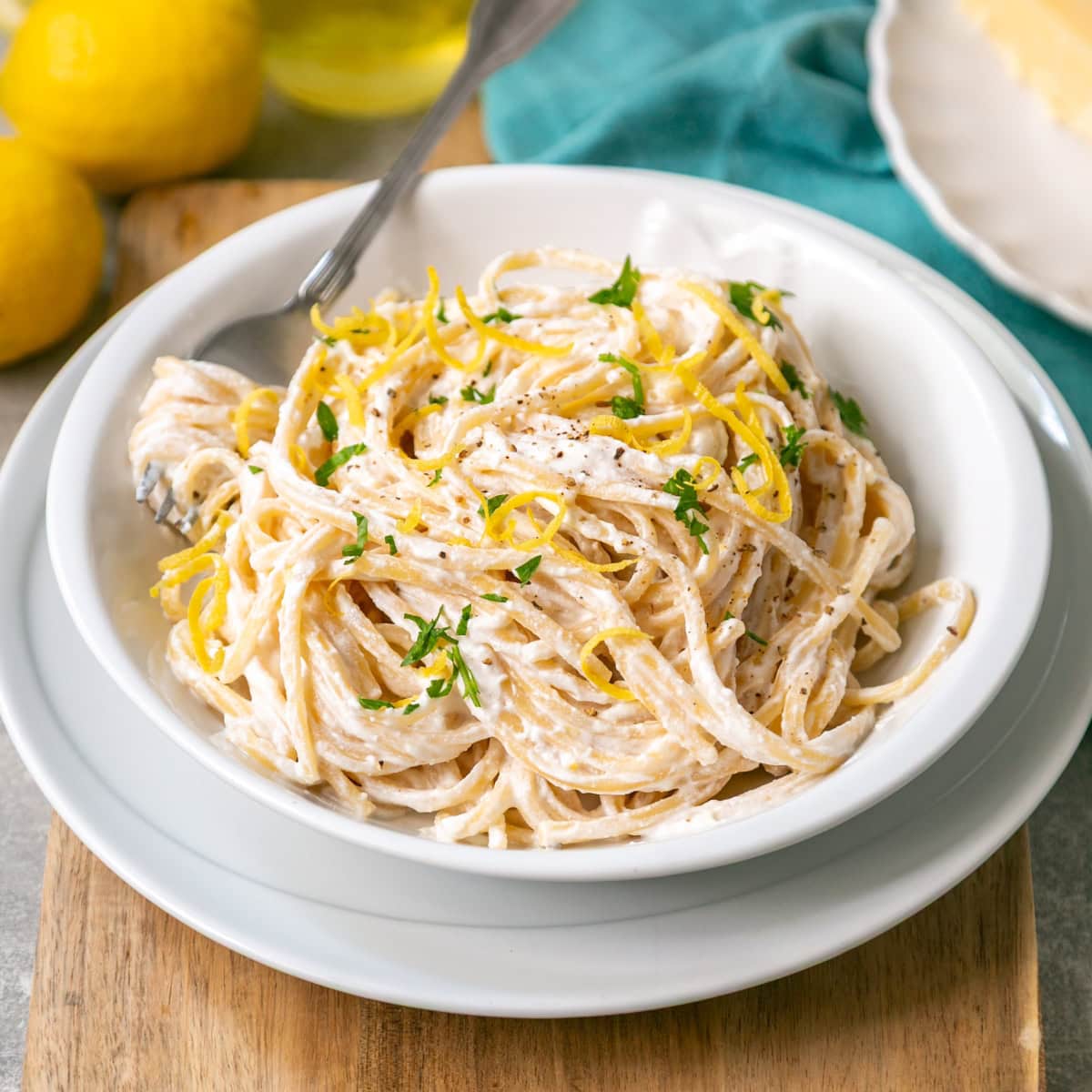
- Stirred through hot pasta with lemon zest and a little pasta water
- Dolloped onto pancakes with fruit
DID YOU MAKE THIS RECIPE?
Please let me know how you liked it! Leave a comment below and share a picture on Instagram with the hashtag #thepetitecook!
Don't forget to subscribe to my newsletter and follow along on Facebook, Pinterest and Instagram for all of the latest updates.
Recipe
Easy Homemade Ricotta Cheese (30 Minutes, 3 Ingredients)
Ingredients
- 2 liters whole fresh milk
- 80 ml fresh lemon juice
- ⅔ teaspoon fine sea salt
Instructions
- Place the milk in a large pot over medium-low heat.
- Let the milk warm gradually to 194°F or 90°C, monitoring the temperature with an instant-read thermometer. The milk should get lightly foamy, if it starts to boil, remove it immediately from the heat.
- Once the milk temperature reaches the 90°C, remove the pot from the heat and pour in the lemon juice and season with sea salt.
- Place a lid over the pot, and allow the milk mixture to sit for 10 minutes undisturbed. After this time the milk should start separating in clumps.
- Set a strainer over a bowl and line the strainer with a cheesecloth. Scoop in the big curds out of the pot with a slotted spoon and transfer them to the strainer, then pour in the remaining curds.
- Let the ricotta sit for 15 minutes up to 1 hour, depending on how creamy you want it to be.
- You can eat the ricotta straight away or store it in an airtight container in the fridge for up to 2 days.
Notes
Troubleshooting
If a batch goes wrong, it's almost always one of these: Nothing separated. Either the milk wasn't hot enough, or it was UHT. If the milk is fine, put it back on low heat, bring it up to temperature properly, and add another squeeze of lemon. The curds are tiny and grainy. Usually too much stirring, or milk that got too hot and started to boil. Next time, take it off the heat the moment it foams, and stir once, gently. Barely any curds formed. Not enough acid, or low-fat milk. Add another tablespoon of lemon juice, wait five more minutes, and see if it comes together. It's dry and crumbly. You drained it too long. Stir a splash of milk or cream back in and it will loosen up. It tastes sour, or too strongly of lemon. Too much acid went in. Use less next time, or switch to vinegar, which tastes more neutral.Nutrition
The information shown is an estimate provided by an online nutrition calculator. It should not be considered a substitute for a professional nutritionist’s advice.

I've made this a few times and keep forgetting to ask if you can post a recipe on how to make mozzarella with the whey that's left
Hi Andrea, how long does the whey last in the fridge? Is it ok to use microfilter milk?
Thank you in advance.
Marisa.
Hi Marisa, it's absolutely okay to use microfilter milk! Whey will keep well in the fridge for at least a week 🙂
Thanks for the recipe!
How many litres of milk do I use to get the 600g of ricotta required to make the 3 ingredient cheesecake?
Hi Leora, I would simply double up the ingredients and use any leftover ricotta for pasta sauces, spread on toasted bread, or just freeze for later use.
From what I’ve learned, this is a recipe for cheese, not ricotta. To make the ricotta, you’d reheat the leftover whey from making the cheese and take those curds out to get ricotta. I just did this today and making your three ingredients Ricotta cheesecake.
Great recipe, thank you! I live in Argentina, and here, people don't know what ricotta is, so I make my own. This one is simple and fast, which makes things a lot easier 🙂
Fantastic! Thank you for sharing!❤️
I made it, and it was really easy. Is there any way I can use the whey?
I use it to make bread.
A list of equipment required would be useful. I had to source a thermometer and cheesecloth before I could start.
Helen, I find it helpful to always read carefully through the whole recipe first and that way I can make a mental note of utensils/equipment I'll need. Hope this helps.